
Article
Two quotes for a “resin driveway” can describe completely different products. One might be resin bound, the other resin bonded. They sound almost identical, they’re often priced very differently, and they behave in completely different ways once they’re on your drive.
If you’re comparing resin driveway quotes, this is the first thing to pin down.
The short version
- Resin bound: stone and resin are mixed together, then trowelled into a smooth, flat surface. It can be permeable.
- Resin bonded: resin is spread on the base and loose stone is scattered on top. It has a rougher, gravelly texture and isn’t permeable.
Most people picturing a modern “resin driveway” mean resin bound.
How resin bound is made
Dried aggregate (small stones, often in blended colours) is mixed thoroughly with a clear resin, usually in a forced-action mixer on site. The mix is then spread and trowelled by hand to an even depth.
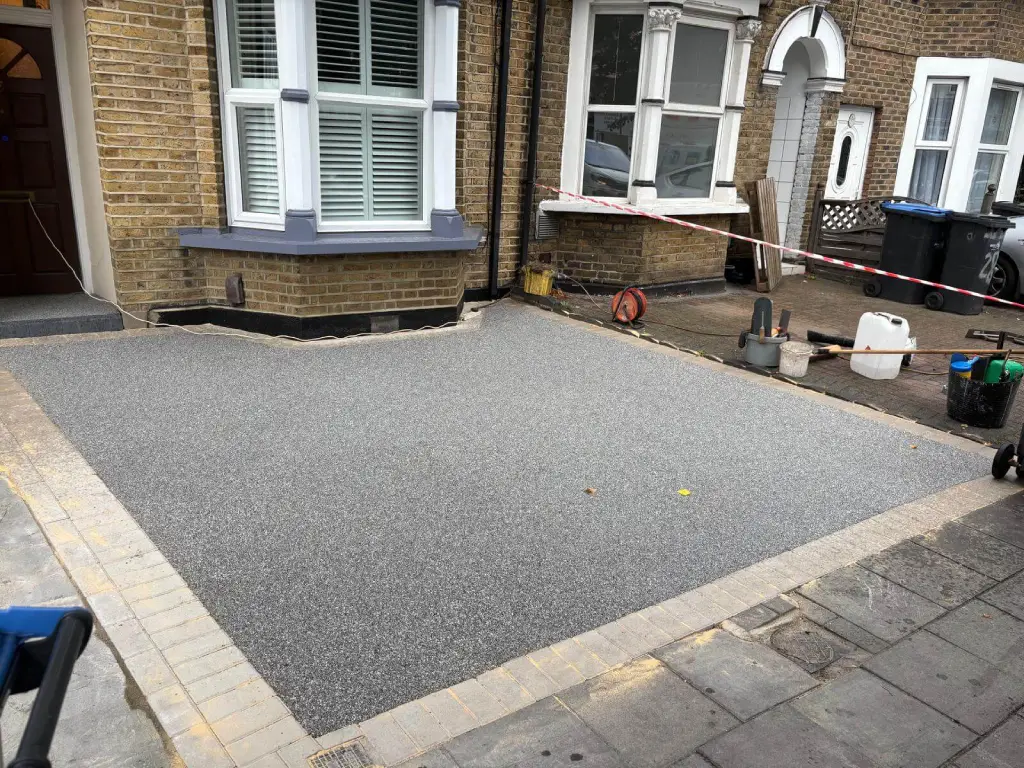
The result is a smooth surface where every stone is coated and locked in place. There’s no loose gravel to kick up, and tiny gaps between the stones let water pass through.
How resin bonded is made
A layer of resin is applied straight onto a solid base, such as existing tarmac or concrete. Loose aggregate is then scattered over the wet resin, and the excess is swept off once it sets.
You get a textured, gravel-like finish that’s well suited to grip. But only the bottom of each stone is held by the resin, and resin surfacing manufacturer Addagrip notes that bonded surfaces may lose more aggregate over time in high-wear areas.
Side-by-side comparison
| Resin bound | Resin bonded | |
| Finish | Smooth, flat, trowelled | Textured, gravel-like |
| Loose stones | None when installed well | Some loss over time in heavy-wear areas |
| Permeable | Yes, if laid on a permeable base | No |
| Typical base | Porous base (e.g. open-graded asphalt) | Solid, non-porous base |
| Grip | Good | Very good |
| Common uses | Driveways, paths, patios | Paths, ramps, cost-sensitive areas |
The permeability catch most quotes skip
You’ll often read that resin bound driveways are “permeable” and therefore avoid planning issues. That’s only half true.
The resin bound layer lets water through, but water then has to go somewhere. Addagrip is clear that resin bound needs a suitable porous base, such as open-graded asphalt, to stay permeable, while bonded systems are typically laid on non-permeable surfaces.
So a resin bound surface laid straight over old, solid tarmac or concrete won’t drain the way people expect. Water sits on the old base, and the “permeable” benefit disappears.
This matters for front gardens. The Planning Portal says new or replacement front driveways over 5 square metres need planning permission if they’re impermeable and the water has nowhere to drain except the road. A genuinely permeable build, base included, avoids that.
Ask every installer: “What’s going under the resin, and will it drain?”
UV-stable resin: the other question to ask
Not all resins are the same. Cheaper resins that aren’t UV-stable can yellow or fade in sunlight, as Homebuilding & Renovating points out. On a light-coloured stone blend, that discolouration is obvious, especially where something has shaded part of the surface, like a planter or parked car.
A reputable installer will tell you exactly which resin they’re using and confirm it’s UV-stable for outdoor use.
What causes resin driveway problems?
Most failures trace back to installation, not the product:
- A weak or unsuitable base, which cracks or sinks and takes the resin with it
- Laying too thin for vehicle traffic
- Non-UV-stable resin that discolours
- Poor mixing, leaving patches that crumble or stones that come loose
- Bad weather on the day, as resin is sensitive to moisture and temperature while it cures
- No edging restraint, leaving the edges vulnerable to breaking away
Which should you choose?
For most driveways, resin bound on a properly built permeable base is the better long-term choice: smooth, tidy, and able to drain.
Resin bonded can make sense for a path, a ramp that needs extra grip, or a budget refresh over a sound existing surface where drainage is already handled.
If you’re still weighing resin against other surfaces, our guide to block paving vs resin compares the two in more detail.
Get a resin driveway built properly
Mainline Drives and Patios installs resin and block paving driveways across Bishop’s Stortford, Saffron Walden, Harlow, Epping and Cheshunt. Browse finished driveways in our gallery.
Request a free quote and we’ll explain exactly what goes under your new surface, which resin we’ll use, and why.
FAQs
Can resin be laid over my existing tarmac?
Often, if the tarmac is sound and stable. But a resin bound layer over solid tarmac won’t be permeable, so drainage needs to be planned separately.
Are weeds a problem with resin driveways?
Weeds can’t easily grow up through a properly laid resin bound surface. Seeds can land and root in dirt on top, so occasional sweeping and washing helps.